Matsuyama Castle|Blue Heliotrope Blooming on the Kencho-ura Trail (May 24, 2026)
The Hairpin Curve on the Kencho-ura Trail to Matsuyama Castle
Just a few seconds after starting the ascent from the entrance of the Kencho-ura trail to Matsuyama Castle, the path quickly turns into a hairpin curve. If you continue straight without turning, you can reach the Ninomaru Historical Garden or the Kuromonguchi trail. Although it is also possible to reach Matsuyama Castle via the Kuromonguchi route, today I chose to take the hairpin curve and continue up the Kencho-ura trail.
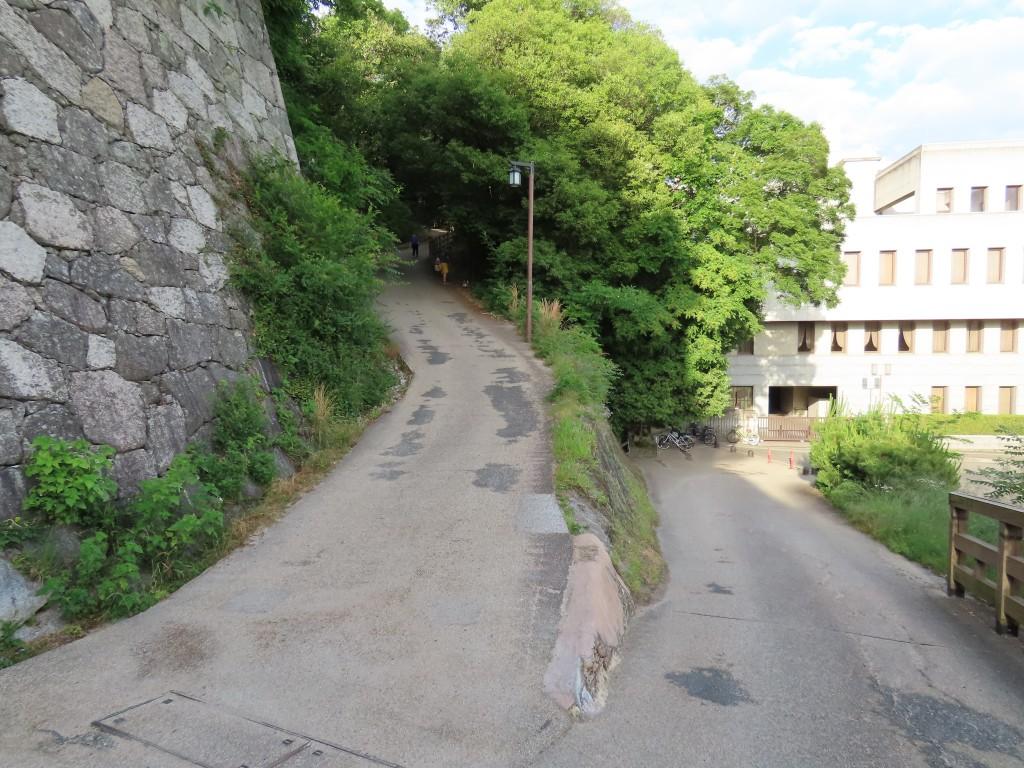
The white building visible ahead on the descending path (the one leading back to the trail entrance) is the Ehime Prefectural Assembly Hall. Instead of taking the right-hand descending path, I followed the left-hand ascending path (the Kencho-ura trail). As I walked up, a cluster of bluish-purple flowers growing along the right side of the trail caught my attention, so I stopped to take a closer look.
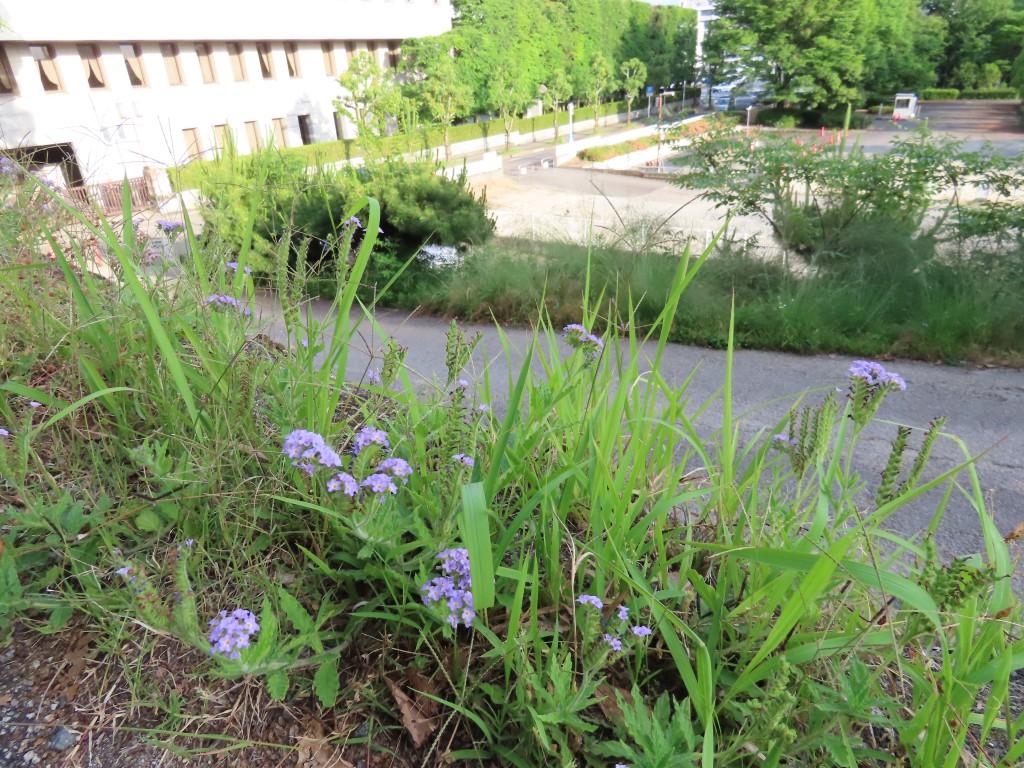
Small Purple Flowers Blooming Along the Trail
Although the Kencho-ura trail is a paved path, resilient wild plants grow along its edges. In spring, you can find small and charming purple flowers like the ones in this photo blooming quietly beside the trail.
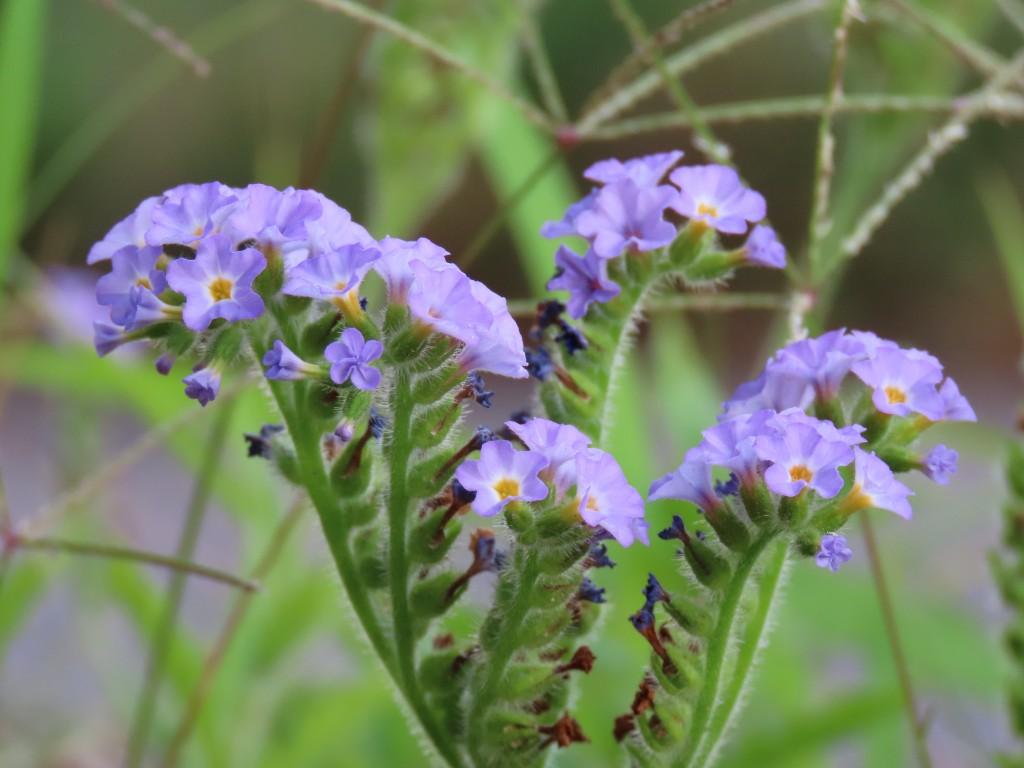
Features of Blue Heliotrope (Dakiba-nioimurasaki, 抱葉匂紫) Heliotropium amplexicaule
After looking into it, I found that these purple flowers appear to be Dakiba-nioimurasaki (抱葉匂紫), known as Blue Heliotrope (Heliotropium amplexicaule). Their small size is adorable, and the way the tiny purple flowers cluster densely together creates a vivid and beautiful display. I personally like that the five petals are fused, forming a sympetalous flower. Viewing the cluster from the side is also enjoyable--the long tubular base flares out like a trumpet, and several of these trumpet-shaped blooms line up in a lively arrangement. These charming flowers, which seem to be Dakiba-nioimurasaki, also grow on the stone walls of Matsuyama Castle near the spot where you look up toward Tsutsui Gate. Perhaps because the flowers are so small, many visitors pass by without noticing them, but they are definitely worth seeing if you visit Matsuyama Castle in spring.